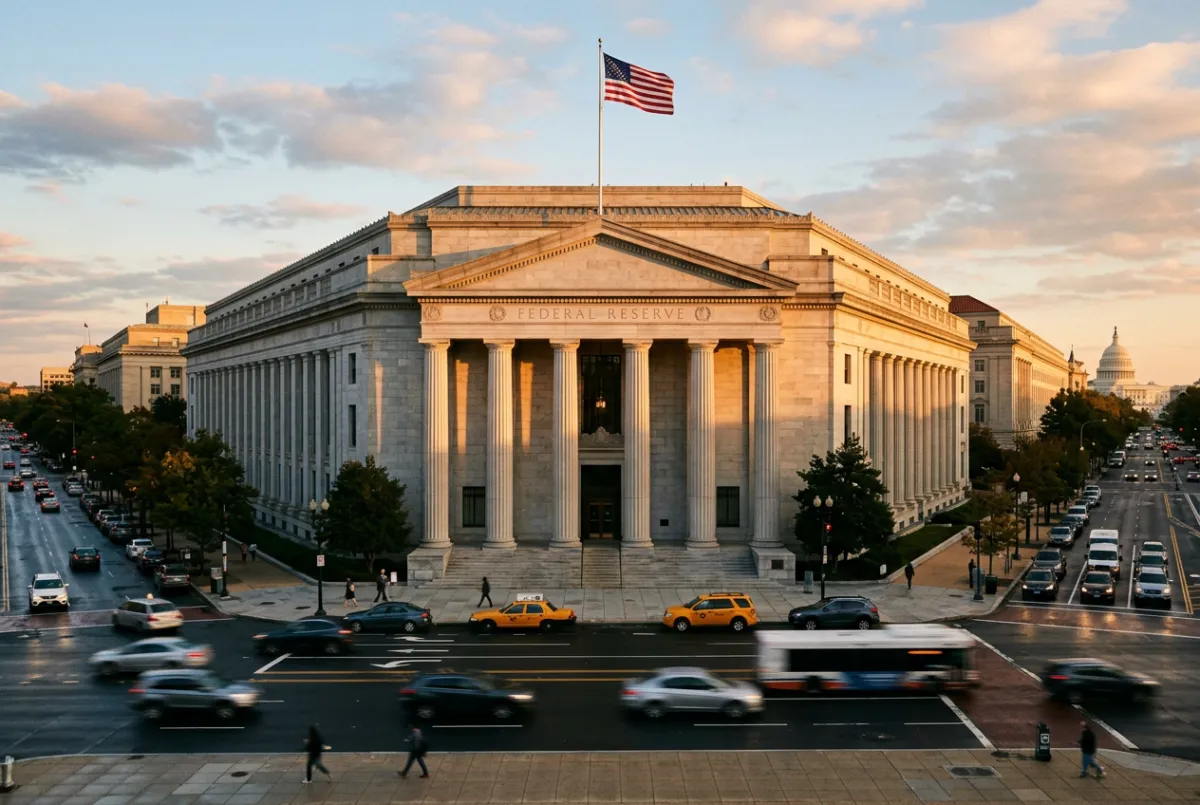
Kevin Warsh Takes Over the Fed on May 15th. Here's What That Actually Means for Your Mortgage Rate.
The headlines are loud right now.
New Fed chair. Rate predictions everywhere. Buyers asking me if they should wait. Homeowners wondering if they missed their refinance window.
I've been closing loans since 2007. I watched 2008 happen from inside this industry. I watched rates nearly double in 2022 while sitting across from families trying to figure out if they could still afford to buy.
I know what Fed changes actually do to real borrowers.
It is not what the headlines are saying.
So let me answer the two questions I've been getting from clients all week.
First: Who Is Kevin Warsh?
He's not a random political appointment.
Warsh served on the Federal Reserve Board of Governors from 2006 to 2011. He was in the room when the 2008 financial crisis hit. Former investment banker at Morgan Stanley. Law degree from Stanford. Appointed originally by George W. Bush.
The word you'll hear attached to his name constantly is "hawk."
In Fed-speak, that means he prioritizes fighting inflation over stimulating growth. Hawks tend to hold rates higher for longer. They'd rather deal with a slower economy than let inflation run loose again.
I know what you're thinking. If he's a hawk, that sounds bad for mortgage rates.
That's where it gets more complicated than the label.
The Thing Most People Get Completely Wrong
The Fed does not set your mortgage rate.
Read that again, because this trips up buyers constantly.
The Fed funds rate controls what banks charge each other for overnight loans. That's it.
Your 30-year fixed mortgage is priced off the 10-year Treasury yield. That's a bond market instrument. It trades every second of every business day based on what investors around the world think is going to happen with inflation, growth, and risk.
Sometimes the Fed cuts rates and mortgage rates go up. That happened in late 2024. Powell cut three times. Mortgage rates rose anyway.
Why? The bond market looked at the economy and decided inflation wasn't dead yet. Investors demanded higher yields to hold long-term debt. Mortgage rates followed.
What matters with Warsh isn't what he says at a press conference. What matters is how the bond market reads his credibility, his consistency, and whether he stays the course on inflation.
What Warsh Has Actually Said
Warsh was one of the voices in 2021 saying inflation was not transitory when the Fed was still calling it temporary.
He was right.
He's been on record saying the Fed's credibility depends on not cutting rates too fast. If inflation comes back after you've already blinked, you've lost the whole game.
He's also criticized the Fed for keeping rates artificially high when the data doesn't support it. He's not ideologically committed to high rates. He's committed to what the data shows.
That's a different posture than the pure hawk label suggests.
He's called for the Fed to be more rules-based, more transparent, and less reactive to short-term political pressure.
If inflation keeps cooling toward 2% and the labor market softens, a rules-based Warsh is going to be under real pressure to cut. And if he follows the data, the bond market will likely respond well to that kind of predictability.
That's the version of this story that could actually help you.
Three Realistic Scenarios for Your Rate
Nobody has a crystal ball. I'd rather be straight with you.
Scenario 1: Rates drop meaningfully. Inflation keeps cooling, the job market softens without collapsing, and Warsh follows the data with two or three cuts in 2026. We could see 30-year fixed rates in the low 6s or high 5s by end of year. On a $400,000 loan, the difference between 6.5% and 5.8% is roughly $190 a month. That's real money.
Scenario 2: Rates stay flat. Honestly the most likely outcome right now. Inflation stays sticky, the economy keeps running hotter than expected, Warsh holds. He's not cutting because the housing market is slow — that's not how this works. We stay in the 6% to 6.5% range and the market adjusts around it.
Scenario 3: Rates go higher. Not the base case, but I'd be doing you a disservice leaving it out. A new inflation spike from tariffs, energy prices, or something else we're not seeing could push rates back toward 7% or higher.
Here's what I know regardless of which scenario plays out:
The leadership transition itself creates a window of uncertainty. And uncertainty in the bond market typically means slightly elevated rates in the short term while investors figure out what new leadership actually does. Not panic. Just how bond markets respond to unknowns.
What You Should Actually Do Right Now
This is where I see people get completely paralyzed.
If you've been waiting for rates to drop before you buy, think about this:
The homes you're looking at today are not going to be cheaper when rates drop. When rates drop, more buyers come back into the market and prices move up. You're not waiting for a lower rate. You're waiting for a lower rate and higher prices at the same time.
That math doesn't always work the way people think it does.
If the home makes sense at today's rate and today's price, have a process for running those numbers. Don't let a Fed chair's name on a news headline make that decision for you.
If you're a homeowner thinking about a refinance: What's your current rate? If you're at 7.5% or higher, you should be watching this closely. Know your break-even point before rates move so you're ready to act when the window opens instead of scrambling after the fact.
If you're a VA buyer: VA loans tend to price slightly better than conventional in this rate environment. If you've got that benefit and you're sitting on the sidelines, you may be leaving one of the best tools available to you unused. I'm a veteran. I've used this benefit myself. It's not something to sleep on.
The Bottom Line
Kevin Warsh taking over on May 15th is real news. His background matters. His philosophy matters.
But anyone panicking about rates crashing or spiking because of one leadership change is missing how this actually works.
The bond market is watching Warsh's credibility. Investors are watching whether he stays consistent. Mortgage rates will move based on what inflation data actually does and how the bond market prices that risk.
Your job as a buyer or homeowner isn't to predict which scenario plays out.
Your job is to know your numbers, have a plan, and be ready to move when the conditions line up for your specific situation.
That's what I help people do here on the Treasure Coast.
If you want to know what this means for your specific purchase or refinance, reach out. I won't give you hype. I'll give you the math.